“Meaningful Happens Here”

As I drove onto the grounds of the Brookwood Community, a special place for adults with disabilities, I realized things are different there.  Someone driving out as I drove in waved at me like I was a long-lost friend or friendly neighbor (I am old enough to remember when neighbors waved at each other, whether they knew each other or not).  I assumed it was a case of mistaken identity.  Or…could it be…just possibly, a place where such friendliness and warmth really exist?  Yes.

While on a tour, I met one of the citizens (the Community’s term for their residents) who handed me a newsletter.  With a broad smile, he pointed out the section that noted the date of their Christmas parties for the community and the Community.  His smile signaled his own excitement.  The cover of the newsletter provided the explanation to all that I was witnessing, but also presented a challenge for us all.  The masthead states quite simply “Meaningful Happens Here.”

The simple truth in the three words begs the question regarding what we do in life and how we live.  Can we say “Meaningful happens here” wherever we find ourselves?  What is our role in that meaningfulness?

Again the Community reminds us that “meaningful” can be profound or sublime.  It was meaningful that the citizen held such hope and anticipation for the big events, and that he could take the step to invite me—sublime meaningfulness in the moment.  It is meaningful that the founder of the Community started with a farm and a small farmhouse, but she never wavered in her vision that now can be seen as a robust community affecting many lives in profound ways.

In each moment, each interaction, each action, can we say “Meaningful happens here?”

“I Don’t Get Many Compliments”

She seemed surprised by the compliment.  That’s a shame.

I was on hold for five minutes to a major oil company switchboard.  I had called to find a contact who I could talk to about a program that I have for job seekers, and the company had just announced it was laying off thousands.  It was no surprise that the switchboard of this major international company was busy.

When the woman’s voice welcomed me and inquired “To whom may I direct your call,” it was calm, pleasant and helpful.  It remained so when she responded to my inquiry with a polite, “I cannot make a direct connection for you, but you can go to the web site and make contact there.  Your inquiry will be directed.”  She paused briefly and then walked me through the entire series of links to place me on the appropriate page.  She didn’t have to do that, and clearly there were other calls she could be handling at the time.

When she finished her 90-second overview, I said, “I know that you must be incredibly busy with calls, but you were helpful, poised and quite friendly.”  My comments were followed by her silence.

“Thank you.  I don’t get many compliments here.  Thank you.”

Unfortunately, that is probably much too common.  Make someone’s day and pay a sincere compliment.

Gallery Showing

I received notice that one of my photographs has a prominent place in a prime gallery space.  I couldn’t be happier, though I’m not sure of the name of it.  Whirlpool?  Frigidaire?  It doesn’t matter; the important thing is that my photograph of her late husband remains on her refrigerator door.

We had coffee the other day, talking about her upcoming book and life in general.  Her husband was one of the people that I had the honor to interview and photograph for a book project a couple of years ago titled “50: Years, Faces, Stories.”  She had told me that the photograph is on her refrigerator and during our coffee conversation, I told her how special it was that my image was there.  Gallery walls are for artistic expression; refrigerators are reserved for matters of the heart.

That has me thinking about the things created for us or by us.  Where do we want creative works to appear?  Magazines, galleries, museums?  Living rooms, hallways, stairway walls?  Refrigerators, wallets, journals?  I guess it depends on whether we seek audiences or connections.

Maybe someday my images will be in private collections or museum holdings.  That would be nice.  For now, I know my work appears on a refrigerator, reminding a woman every day of the man she loved for decades.  And that makes me happy.

Happy Labor Day

“Why don’t you just hire someone to cut your yard, dad,” my youngest son asked as he headed out to work and I prepared to take on the not-been-cut-in-six-weeks-jungle-high-why-don’t-I-harvest-it-as-hay front yard. I have a long list of reasons, but one is that work is good for the soul.

Today is Labor Day and hats off to those who work. I believe it is sad that there are 94 million people not participating in the work force exactly because work is good for the soul of the individual and of the country. Many of us grew up hearing “honest work for an honest wage” was a good guide. It still is. I’m not sure how many hear it. Or believe it.

I went into a local liquor store the other day and when looking for the cashier, I heard a voice say, “I’m coming. Slow, but I’ll get there.” I smiled and said, “Not to worry” as she came from a pile of boxes that she was emptying to the register.

“I’m just tired.”

“Long day, huh? Will you be going home soon?”

“Not until we close. We are short on cashiers. We hire them but they don’t hang around long. They don’t want to work. People don’t stay and customers notice. They just don’t stay long…don’t want to work.”

I would guess that she was in her late 60s, and still going strong, albeit not as fast as she once was.

Whenever I feel a bit tired, I think of my forebears and their labors: working land, picking cotton, raising chickens. I think of my mom and dad and their labors and struggles in a world of few conveniences that we know today.

While Labor Day was established to honor the paid worker, there is honor in unpaid labors—at home, in the community, and so on. Unpaid does not mean unrewarded. The rewards come in seeing projects accomplished, helping others, learning new skills…the list is endless.

Work is good for the soul, and for the world. Happy Labor Day!

A Month of Sundays

I haven’t seen Charles in a month of Sundays, but even before he turned my direction after I called out “Sir Charles” to him in the parking lot, I could feel the effect of his friendly smile. Handshakes, a hug and a brief conversation ensued in the parking lot of a Kroger grocery in League City, TX. I told him that I continued to tell the world about him and that any time that I spoke in the community and referenced him, at least a couple people in the audience knows him. He smiled in an “aww shucks” sort of way.

Charles is a stocker. But that is only a job title. What he does is connect people to the store at which he has worked for many years. He does it by smiling, caring, conversing and helping out. Ask him where anything is, and he can tell you. But, you likely won’t have a chance to ask because he can see a lost look in a customer’s eyes and is quick to say, “Hello, can I help you?”

I wrote about Charles more than a decade ago for my Listen to Life newsletter, and his story appeared in my book, Listen to Life: Wisdom in Life’s Stories. His is on page 99 if you have the book. I have shared the wisdom of his ways since we first met. I told him the other day that I still share his story. In fact, I had used his story just a few days ago in a team development workshop that I conducted for a local nonprofit.

The conversation continued in the store when I returned to bring him another copy of the book. I asked how his mom was doing. We used to talk about her when I would see him on my grocery runs. She died five years ago, he said. I couldn’t believe how long it had been since we had conversed. He said his mom was proud of him for being in the book. I felt badly that it had been so long and I was years late in sharing my condolences.

I’m glad that I was in the parking lot when I was, that Charles was getting out of his car while I drove by, and that we had a chance to talk. I’m even glad that fate served to remind me how important it is to stay in contact with people, no matter how you know them. A month of Sundays is much too long.

Signals

In baseball, signals reveal plans, strategies, insights and sometimes, they are used to throw off the opposition. Signals matter.

The father-son team that I met recently are also a coach-player duo, and they realize how important clear signals really are. Clear communications indicate intent, purpose and meaning.

The father-coach was discussing the challenges of how to coach one’s child, and conveyed a conversation that he had with another father-coach. Having played that role well over a dozen times myself, I was intrigued by his wisdom. We both agreed that a parent can’t play favorites with their own child. The negative aspects of doing so can poison an entire team. Finding a way to be fair is the main challenge. The relationship with the team is one thing, but the relationship between parent and child is altogether more important. It is through this perspective that he saw a solution. A brilliant solution. A nugget of wisdom for life.

He described situations when his son is near a group of kids who are acting up. The dad-coach calls out discipline and/or correction, spoken to his son but actually aimed at the kids nearby. It tends to catch youngsters’ attention when the coach is calling out his own kid’s name. He can easily call out, using his son’s name to command “you guys cut it out.” Here’s the clincher: If the comment is not really directed at his son, but he is only using his son’s name to help get the desired effect with the other nearby players, the dad-coach pats his chest over his heart while calling out. His son immediately knows the meaning of the signal. Such signal gestures are not uncommon in baseball; this particular use of a signal certainly is, though.

We could all do a better job of giving signals to reinforce or clarify our communications and messages. Tone, body language, gestures and expressions are only a few of the clarifiers that we can use. Kind words alone are nice, but accompanied by a wink or a hug or a smile creates clarity and value. Strong words are sometimes necessary, and other signals can help keep the words from being damaging. In baseball, coaches go to great lengths to be sure the players understand meaning, plays and strategies. We should go through such efforts for clarity in life. Signals matter.

How Wonderful Life Is

She and I struck up a conversation prior to my scheduled presentation at a Rotary Club (proud to be a Rotarian) at which I was going to share thoughts and stories regarding effecting change. One of the components of my message is that in life one should always “play your heart out.” To do so helps make for a wonderful life. Little did I know her role in the message until we engaged in genuine conversation.

She worked in the kitchen at the church where the meeting was held. A luncheon meeting, attendees were to gather their plates of burgers and beans, and then go to the gathering area for the meeting. It was in the latter area where she stood, along with other women from the church who pointed out where the drinks and condiments were, carried dessert for those who hands were full with a plate full of burger and beans, and generally make everyone feel welcome. Clearly, her heart and soul were made for service and for smiles; the evidence was overwhelming.

One comment led to another, and before long I had learned of her high school teaching career of more than 40 years, including a variety of subjects. She challenged me to guess which ones. I guessed one, she nodded, but then quipped, “You’ll never guess the other.” I guessed and guessed, egged on by her smile and by her pride in my failure. I surrendered. She paused and grilled me with a couple more questions while also providing hints (“What color are my eyes?” she asked) to stimulate my thinking processes. I thought she must have been a master with pop quizzes and the Socratic method of teaching.

“German,” she said, clarifying the mystery. The answer, of course, spawned new questions and she obviously enjoyed the give and take. She was…playing her heart out.

The conversation became a bit more philosophical as she reviewed the path that life has taken her and “how life goes.” There were twists and turns, ups and downs, surprises and predictability…such is life.

More Rotarians began to show up, serving as a call to duty. She said that she needed to get back to her work, reiterating how much she enjoyed the work, the journey…and, “How wonderful is life.”

Independence Begins With…

Independence Begins With…

I, as in “I can do this. I can solve the problem. I am responsible and accountable. I am capable on my own.” Independence begins with self-reliance. It is only with “I” that independence is earned or maintained.

It is probably not mere coincidence that the world’s grandest experiment on independence, liberty and freedom came at a time when people made things, grew things, fixed things, built things and survived. The ability to help others with service and philanthropy came from one’s ability to strive, achieve, fail and try again.

Ralph Waldo Emerson stated in his essay Self-Reliance, “Trust thyself: every heart vibrates to that iron string.”

Independence of thought and action comes from within; people must access their life’s worth of knowledge, talent, conviction and courage. Such behavior requires being untethered from conformity, popularity and group think. Emerson continues: “Insist on yourself; never imitate. Your own gift you can present every moment with the cumulative force of a whole life’s cultivation, but of the adopted talent of another you have only an extemporaneous half possession.” Be you, not the other. Being yourself—free to express, think and believe—you become the epitome of independence.

Independence, freedom and liberty, and the courage and commitment to preserve them begin with each individual. “Nothing can bring you peace but yourself. Nothing can bring you peace but the triumph of principles,” Emerson says.

Happy Independence Day to you, and thanks to all the individuals over hundreds of years who have challenged each of us to stand strongly for independence by finding personal peace through the triumph of principles…independence begins with I. Proclaim it today and daily.

The Three-Minute Keynote

  IMG_3458

Sometimes less is more.

I had the honor of presenting a motivational message at the scholarship award event for Project Joy and Hope today. The organization founder/executive director, Jan Wheeler, began the nonprofit after she lost her daughter to cancer. (Learn more at their site and support them if you can.)

I was honored to be able to provide the inspirational message as part of the program, partly because my mom and dad lost their first daughter to leukemia decades ago. Long before the type of support services available now, mom and dad tried everything they could as mom carried Ann on a pillow to keep the pain of touches to a minimum. Ann died at five.

As a speaker, my jobs involve presentations ranging from ten minutes to a few hours. I was asked to speak for eight or nine minutes today. I honed and practiced my message, working to get to the kernel of my message. (I’ve been known to admit that it can take me eight minutes to say hello.) It was important to keep things on schedule and, considering the lives of these young people who have lost parents to cancer, they didn’t need me rambling on just because I could. I focused my message and focused it more.

Prior to my time to take the microphone, there were many wonderful messages. Everything was short and sweet, to allow as much time as possible for the scholarship awards. Projected images of the honorees and those they honored flashed with quotes from the students’ essays. They are amazing young people of courage, wisdom, patience and peace.

My time to speak arose and I walked to the mic. I mimed picking up a heavy treasure chest and placed it on the lectern. My topic, Discover and Polish the Pearls Within, uses the analogy of an oyster that makes treasures from the disruptions of sand…the sand becomes a treasure. I’ve delivered versions of the topic dozens of times, but never in as short a period at the eight minutes scheduled for today. I then began my speech.

As I began my points, I “heard” a message akin to “they don’t need that example, just honor them,” and “they don’t need that description, just let them know they are treasures and treasured.” This editing-in-the-moment led to a three minute speech. Three minutes!

It took me awhile to get past the notion that I only spoke for a few minutes, but then I realized…people don’t need long stories when they really need to hear, “I love you.” People don’t need eloquence and verbosity, when they really need to hear that they are respected and celebrated. I believe the editor in my head that modified my speech wanted the honorees, family members, friends, volunteers, staff and board members to simply know they were loved and appreciated. I was not to be the main carrier of that message today, but merely be a small voice among the chorus of people and actions that said, “You are loved and we celebrate you.”

Sometimes less is more.


Happy Dorothy Day

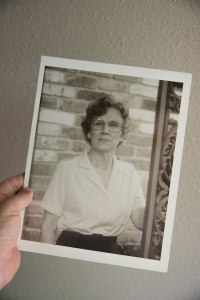
20150509_0003

20 years ago, my mom celebrated her last Mother’s Day.  About six weeks later, she passed away quietly in her sleep in bed with my sister asleep at her side.  For today, it is Dorothy Sobieski McInnis Day as a tribute to all mothers—past, present and future.  It seems appropriate to share again, 20 years later, the eulogy that I prepared and read at her funeral.  I hope this gives you insights into all moms, the lives they live and the influence they have on the world. While we pause for a day for moms, mothers’ days are in the moments of every day.

A week ago today, I wrote about my mom. I had visited her on Sunday to talk her, my dying mother.  On Monday I had to discharge a bomb of thoughts and emotions. The first sentence read “She died with poise.”  Mom’s life was one of poise–calm and class in the adversities of living.  A life developed during the Great Depression, continued through forty-plus years of marriage to a loving, adoring man who was a a pretty damned good father but sometimes a difficult husband, and all the way to death.

Only once did I see mom “unpoised.”  Is that a word?  Anyway, dad had just purchased a fishing boat.  It was April 1968 and dad had fulfilled a lifelong dream by buying the boat which would take us onto one of mom’s most dreaded enemies:  water!  We spent the first day on our expedition at San Luis Pass getting stuck on every sand bar in the Pass at least twice.  Mom hated the water and feared it, never mind the two lifejackets she had tied securely around her.  The responsibility of pushing us off of the bars belonged to dad and Molly, my sister.  I inherited my mom’s water aptitude.  The end of the first night found us heading out to the Gulf without running lights…dad was lost on the water for the first and last time in his life.  The next day we went out for another day of joyful fishing.  As we sped across the water–deep, dark green water on one side of the boat and a clear view of hermit crabs on sandbars on the other–mom was still less than secure.  When the inevitable happened–stuck on a sandbar–mom was uptight.  Dad jumped over the side, willingly accepting his role of boat pusher.  He disappeared, save for his trademark brown cap floating on the water.  Seconds later, light years after mom declared herself a widow, dad resurfaced, sputtering some words about how deep the water was.  From the water, he calmly handed mom his wallet, new watch and cap.  He asked her to throw him a rope.  As she performed her backswing for the throw, dad yelled “Not that rope.”  Mom was about to throw him the rope…the one with the anchor on it.  Ah, poise.

Mom’s gravestone describes her as “A Tender Mother and A Faithful Friend.”  I could probably leave it at that, but I won’t.

In 1974, Molly and I gave  mom and dad for Christmas this poem that I wrote:

There are two stones

Simple rocks of granite

Which have held me up

And kept me at it.


Rocks so soft

On which to lay

Tablets of wisdom

And words to say.


Shiny and smooth,

But weathered on edges

Nonetheless strong,

Steady and rigid.


Slabs to lean on

When exhausted and old.

Foundation for a home

When winds get cold.


These enduring stones

Are part of my life.

Forever mom and dad,

Husband and wife.

What type of woman was this?  Many of you are here in honor of mom; many of you are here for her family–thank you for that, but you really should know her.

Cute, athletic and a great dancer in her youth, she married a man who couldn’t/wouldn’t dance.  She must have been something.  As dad described their first meeting, dad was working late at a gas station.  A muscular, cocky 20-year-old boxer pulling long hours.  From the station he saw someone snooping in the house across the street.  Grabbing a pistol from the desk, he walked over and asked the peeper what he was doing.  The voyeur said he knew the people there and was trying to get their attention.  Dad took the man to the door, knocked and asked the woman who answered if she knew him.  She said “no” and dad told him to leave and promised he would shoot the man if he did it again.  Dad asked the name of the young woman who answered the door.  All attempts to find out were answered with “I’m in the telephone book.”  Dad went back to work.  He told his fellow late-night employee that he just met a gorgeous woman and was sure that she was the woman he would marry.  Quite a statement for dad at that time in his life.  The woman, of course, was mom.  After dating 3 years, they married…7 years into the Great Depression, a life-affecting circumstance.

She remained active all but the last few years of her life, but shied away from the spotlight. She often cited her ability to do cartwheels with Molly’s friends.  Mom was 50 and still playing like that.

Marriage to dad and his poor Mississippi family, living through the meagerness and tough times of the Depression,  and raising four kids–and one foster child– across two generations were managed…with poise.   Calm, steady, always supportive.

When we talk about mom we see visual images. Snapshots of memories pass amid our tears and laughter.  The things she did, the life she had, her experiences:

Snapshot•  Her years as a child:  Her Polish-Catholic immigrant mother divorced when mom was two; her mom died eight years after that.  Her mom, intelligent, able to speak 5 languages, and strong-willed profoundly affected mom. At 16, mom moved out on her own…met dad at 17…married him at 20.

Snapshot•  A young mother watching as her small, 14-year-old son sat atop phone books to see out of the cockpit prior to his first solo flight.  Jim was flying at 14.

Snapshot•  That same young mother, making treks with dad to Mayo Clinic in Minnesota and John Sealy Hospital, holding Ann, their  dying daughter, on a pillow as she went through the  suffering of leukemia before she died at the age of 5.

Snapshot•  Behind the stove, making divinity that filled the house with a wonderful smell and that served as appreciated presents to kid’s teachers for decades.  And, behind that same stove, filling the house with the noxious odor of greens for her husband.  Ugh.

Snapshot• Cool, calm intermediary, liaison and conduit between the kids and dad.  We each had our…”issues” during our growing years…have they stopped…and mom always promoted “easing us through.”  She guided with a gentle hand and a faith in our principles to do right.

Snapshot•  The mom who helped her daughter pull off Little Broadway in Memorial Bend, a play that offered attendees soda and homemade cookies and boasted of press coverage.  A play presented by a bunch of kids.  It was quite a community event.

Snapshot•  Mom discussing with neighbors our totally destroyed front yard.  It was the playground for half the children in Memorial Bend from 1956-1970.  Having a safe place for kids to play was more important than having a nice yard in the developing subdivision according to mom and dad.

Snapshot•  A warm welcome smile to all her kids after they came in from their adventures:  amateur spelunking in the hills of San Antonio, scuba diving using homemade air tanks, exploring the bayous and creeks in the Memorial area, first dates while a protective father panicked.

Snapshot•  Tender and courageous caregiver to everything from kids’ colds to Ann’s leukemia to dad’s cancer, from her husband’s mom’s slow demise to the grueling 2 months of her husband’s death in ICU.

That is just a couple of pages from our mental scrapbook on mom, sister, aunt, friend….

She was such a good example for us, though always modest about that role.  When she commented on how well Molly took care of her during her illness, she was surprised to hear Molly ask, “Who do you think I learned this from?”  She was surprised, but pleased, of course.  She was always there–tender and faithful–with a smile, an ear and a backrub.  Always giving others rope, whether they built bridges or nooses was up to them.  But I don’t think mom would ever pull the noose if someone made it.  Infinite in patience, she moved gracefully through life, taking the rhythm of life with the smoothness of the dancer that she was.  She was never flustered by what God had in mind for her.  I don’t recall mom ever blaming anyone else for any condition in her life, except maybe the doctors that she felt took her beloved husband away.  Over the years, I have come to appreciate her ability to never blame others but to have the courage and will to say “This is my life.  I will make of it what I will.”  In this time where people look for others to blame for failures, hurts, and imperfections, it is nice to look to mom as an example of someone who accepted life and moved forward with faith.  She had a wrought iron spirit.  Don’t mistake her for rolling over for life, she had the knack of knowing when to draw a line in the sand and when to let the tides wash it away.  The line was only to be drawn when it came to issues of supporting her family.

An extended review of this family’s memory collection would show a seamstress, fisherwoman (with an incredible knack of fishing while doing crossword puzzles), housekeeper, and so much more….always done with poise.

I believe all of us are here today because of what she taught—always matching her actions to her words—on how to love genuinely and selflessly.  How to sacrifice.  How to give.  Perhaps her greatest legacy is what she taught those around her:  how to be a tender parent and a faithful friend.  All of us here today appreciate her lessons.  There can be no greater legacy.

Wednesday, June 29, at about 3:00 a.m., she left us.  Greeting her was dad, with a fishing pole in one hand and little Ann holding the other.  After a soft kiss and a tender pat on the bottom from dad–a love pat as they called them–dad, mom and Ann went fishing.  And we’re happy for her because we love her.  Today, we aren’t burying our mother, sister, aunt and friend; we are celebrating a reunion.

“Forever mom and dad

Husband and wife.”